Guides
Stand Up a Headless ComfyUI Render Service with a Queue and Dashboard
· RenderBob team
Running ComfyUI as a shared studio service, not a desktop app, means going headless with a real queue and dashboard. Here is the shape of it.
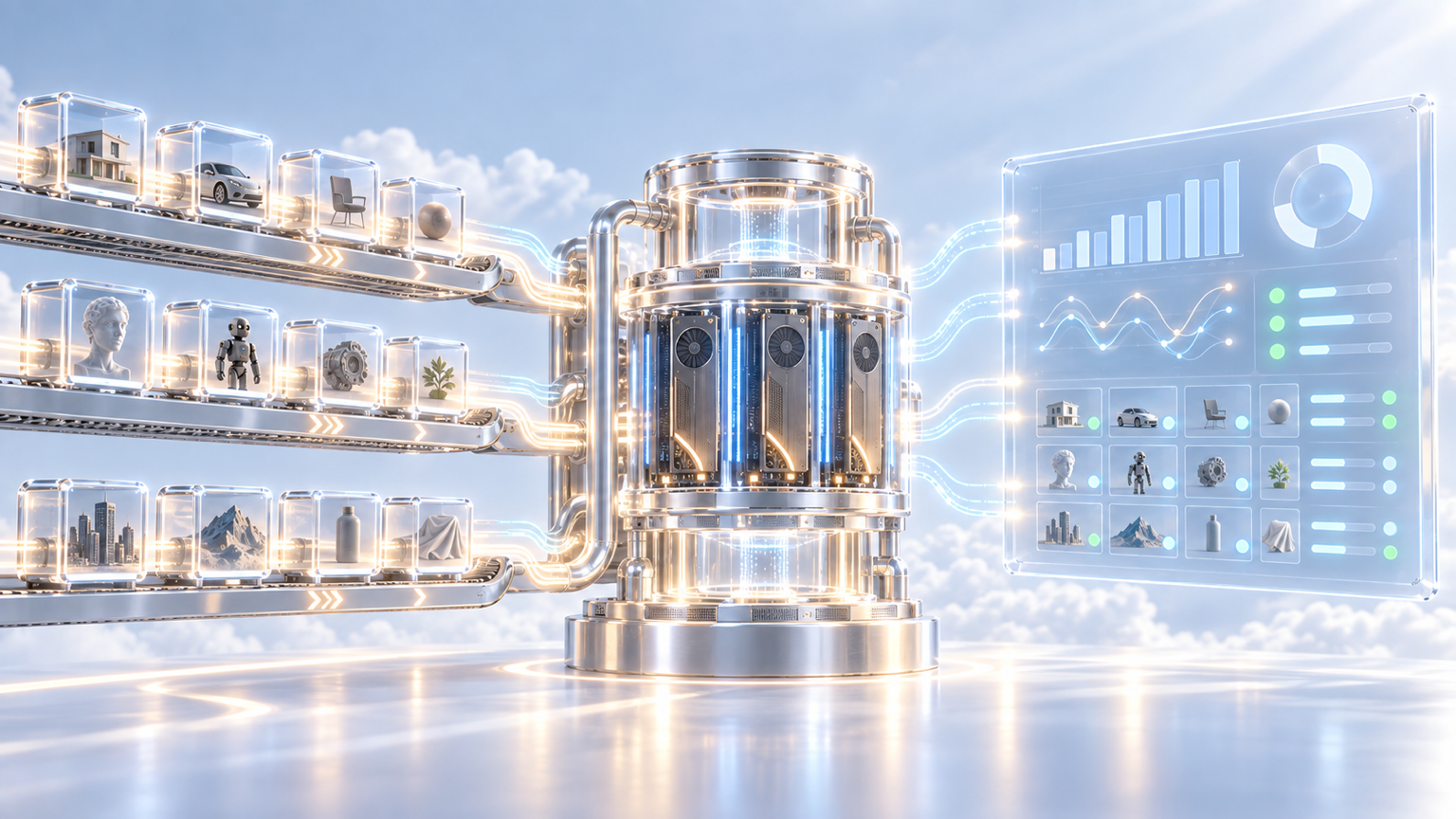
ComfyUI started life as a desktop app one artist drives by hand. Turning it into shared studio infrastructure means running it headless, as a service several artists submit to, with a real queue and a dashboard. Here is the shape of that build, and the traps.
Run it headless on dedicated workers
Instead of an artist babysitting a local window, ComfyUI runs on dedicated render machines with no GUI in the loop, accepting jobs over its API. Disable live previews on headless workers for stability, and use the memory flags that fit your models (async offload, and reserved VRAM to leave the OS headroom).
Respect the one-process-one-runner reality
A single ComfyUI process executes one workflow at a time. True concurrency means running multiple worker processes, each pinned to its own GPU. Your service is really a pool of these workers plus something in front deciding who gets the next job. That something is your scheduler, and it is the heart of the system.
Put a real queue in front
Artists submit to one endpoint; a server-side queue holds jobs; the scheduler dispatches each to an available, suitably-sized worker. This is where you encode the hard stuff: matching a job's VRAM needs to a worker's capacity, keeping the right models resident to avoid reload thrash, and routing overflow to cloud workers when the local pool is full.
Build a dashboard, because you cannot operate what you cannot see
Surface queue depth, per-worker status, GPU/VRAM utilisation, job progress, failures and, critically, cost per frame across owned and cloud workers. Unexplained load and stalled jobs are invisible without this, and monitoring is how studios first catch problems. It is how the 2026 cryptomining infections were spotted.
Keep it secure and reproducible
Never expose worker ports to the internet. Put the service behind a VPN or tunnel. And ensure every worker runs the same pinned environment, or the same job produces different results on different workers. The scheduler, the queue, the dashboard, the security and reproducibility around them: that is the work that stands between a room of individual ComfyUI installs and a studio render farm. The desktop app was never going to become a farm on its own.
More from the blog
- A Risk Ladder for AI in Documentary
Screenweaver's 8 October guide ranks five documentary uses of AI by risk, from archive restoration to a synthetic face, and pairs them with EU disclosure rules now in force.
- The B-Roll Gap: Generated, Selected, or Shot
Every cut eventually needs a shot that does not exist. AI can generate it or search a library for it, and stock libraries are answering with different rules. Here is how to choose.